
Rézzel szennyezett szőlőültetvények talajának kezelése bioszénnel

Data provider

Budapest University of Technology and Economics, Department of Applied Biotechnology and Food Science, Environmental Microbiology and Biotechnology Group

Organisation/Data provider's nameBudapest University of Technology and Economics, Department of Applied Biotechnology and Food Science, Environmental Microbiology and Biotechnology Group
Name of contact
Dr. Molnár Mónika, Dr. Feigl Viktória
Contact details
Telephone/fax
+36-1-4632347
Compulsory sheet of the technology
Technology Hungarian nameRézzel szennyezett szőlőültetvények talajának kezelése bioszénnel
Technology name
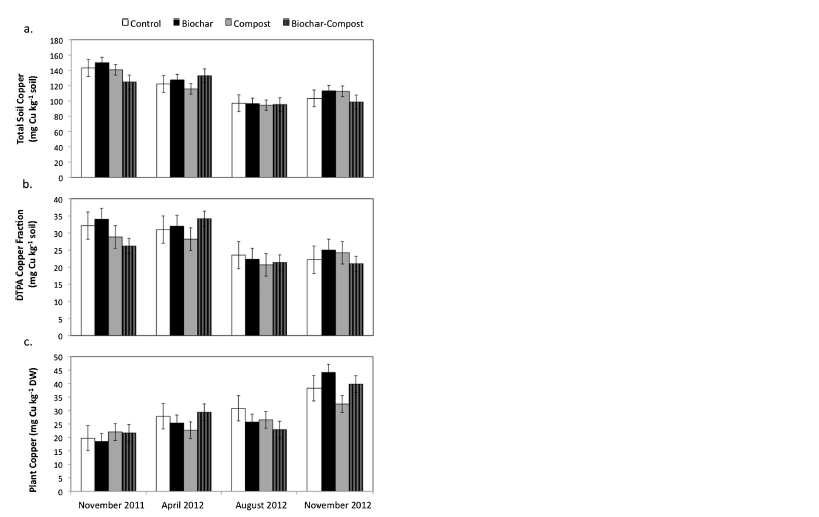
The effects of biochar and compost amendments on copper immobilization and soil microorganisms in a temperate vineyard
Country of origin
Svájc, Németország
Stage of development
developed, proven by demonstration
Start of the development
2011
End of the development
2012
Standard number
n.a.
Financing of the project
Name and number of the project
Carl Zeiss Stiftung finanszírozta
Application sphere
Contaminant group|Contaminant typically treated
  • Metals, semi-metals and their compounds
  • copper
Description of environmental risk
Typical measured/quantitative value of environmental risk
koncentráció
The metric unit of measurement of the typical environmental risk
mg/kg
Typical initial value
127
Maximum initial value
150
Typical final value
102
Maximum final value
95
Contaminant group|Contaminant typically treated
  • Metals, semi-metals and their compounds
  • copper
Other contaminants
Cu-DTPA (biológiailag hozzáférhető Cu)
Description of environmental risk
Typical measured/quantitative value of environmental risk
koncentráció
The metric unit of measurement of the typical environmental risk
mg/kg
Typical initial value
30
Maximum initial value
34
Typical final value
22
Maximum final value
23
Contaminant group|Contaminant typically treated
  • Metals, semi-metals and their compounds
  • copper
Description of environmental risk
Typical measured/quantitative value of environmental risk
Növényben mért Cu koncentrációja
The metric unit of measurement of the typical environmental risk
mg/kg
Typical initial value
22
Maximum initial value
18
Typical final value
35
Maximum final value
45
Information on the technology
Environmental element/phase the method may be applied to
Unsaturated (whole) soil
Technology type
simple
Basis of the technology
Chemical
Technology description

A bioszén növényi vagy állati eredetű hulladék pirolízisével előállított anyag, amely segítségével javíthatóak a talajok fizikai, kémiai vagy biológiai tulajdonságai.
Gombaölőből származó rézzel szennyezett szőlőültetvény talajára előzetesen fedő növényt ültettek majd bioszén, és bioszén-komposzt keveréket szórtak ki rá, melyet 10 cm mélyen rotációs kapával a földbe forgattak. Várhatóan a bioszén megköti a réz egy részét, a komposzt pedig a talaj mikrobáinak aktivitását és sokféleségét javítja.

Description of the novelty of the technology

Ez a kutatás az első tanulmányok egyike, amelyik a bioszén hosszabb idő alatt kifejtett hatását vizsgálja a mikrobák jelenléte, aktivitása és sokfélesége szempontjából. Az eddigi kutatásokkal ellentétben, a bioszén, a komposzt és a bioszén-komposzt keveréke sem immobilizálta a biológiailag hozzáférhető, mobilis rezet a talajban ezen a szőlőültetvényen. A kezelések nem csökkentették a növény által akkumulált réz tartalmat és a felvehető réz frakciókat a talajban. Ezzel ellentétben a fedőnövényzet jelentős mennyiségű rezet vett fel két növekedési szakaszban, ezzel csökkentve a talaj réztartalmát.

Technology classification
Remediation technology type
  • physico-chemical remediation
  • chemical stabilisation
Remediation technology from contaminant point of view
immobilisation
Remediation technology from execution point of view
in situ
Technology-monitoring
Technological parameters
Biological activity
Contaminant amount
Monitored environmental element
Unsaturated (whole) soil
Costs of the technology
Capital costs
200 - 400 Euro
Specific material costs
200 - 400 Euro
Specific total costs
above 400 Euro
Remarks on cost calculation

Bioszén ~90000Ft/tonna
Alkalmazott mennyiség: 8 tonna/ha
Terület: 0,096 ha
Az anyagköltség így: ~70000Ft

SWOT (evalaution based on scores)
Costs
4-low
Time requirement
0-non relevant
Space requirement
0-non relevant
Workload requirement
4-low
Equipment, apparata requirement
4-low
Qualified labour
5-very low
Environmental risk and workplace risks
4-low
Ability to meet the target value
0-non relevant
Environmental efficiency
3-medium
Cost efficiency
0-non relevant
Generation of any recyclable byproduct
no
Generation of any byproduct to be treated
no
Automation/remote control
no
Feasibility
1-bad
Availability
5-excellent
Well known
2-weak
SWOT (evaluation in words)
Strengths

Korábbi kutatások alapján az alkalmazott bioszén megköti a talaj Cu szennyeződését. Könnyen hozzáférhető, gazdaságilag kedvező eljárás.Bioszén komposzttal való felhasználása növeli a talaj mikrobáinak aktivitását és sokféleségét,illetve javítja a talaj termékenységét, a víztartó kapacitását és a tápanyag visszatartását. Fedő növény ültetésével segíteni lehet a Cu megkötődést.

Weaknesses

Az alkalmazott bioszén csak olyan közegben csökkenti jelentősen a Cu szennyeződést, melynek pH értéke nagyobb, mint 8.

Possibilities

Egyéb szerves hulladékból előállított bioszén alkalmazása.

Threats

A bioszén PAH és egyéb toxikus szennyezőanyag tartalma bioakkumulálódhat a mezőgazdasági termékekben.

Completed applications
Site name
Wallis kanton
Location of the application, country
Svájc
Start date of the application
2011
Alkalmazás befejező időpontja
2012
Application stages
Demonstration
Size of the treated area
Depth (m)
10.0
Landuse
Agricultural
Other landuse
szőlőültetvény
Origin of the pollution
gombaölőszer
Contaminant
Contaminant group|Contaminant the method was applied to
  • Metals, semi-metals and their compounds
  • copper
Other contaminant
összes réztartalom
Description of environmental risk
Typical measured/quantitative value of environmental risk
koncentráció
The metric unit of measurement of the typical environmental risk
mg/kg
Typical initial value
127
Maximum initial value
150
Typical final value
102
Maximum final value
95
Contaminant group|Contaminant the method was applied to
  • Metals, semi-metals and their compounds
  • copper
Other contaminant
Cu-DTPA (biológiailag hozzáférhető Cu)
Description of environmental risk
Typical measured/quantitative value of environmental risk
koncentáció
The metric unit of measurement of the typical environmental risk
mg/kg
Typical initial value
30
Maximum initial value
34
Typical final value
22
Maximum final value
23
Contaminant group|Contaminant the method was applied to
  • Metals, semi-metals and their compounds
  • copper
Description of environmental risk
Typical measured/quantitative value of environmental risk
Növény által akkumulált Cu koncentráció (szár)
The metric unit of measurement of the typical environmental risk
mg/kg
Typical initial value
22
Maximum initial value
18
Typical final value
35
Maximum final value
45
Publications, references
Publications

K.A. Mackie, S. Marhan, F. Ditterich, H.P. Schmidt, E. Kandeler: The effects of biochar and compost amendments on copper immobilization and soil microorganisms in a temperate vineyard. Agriculture, Ecosystems and Environment 201 (2015) 58–69

References

Brewer, C.E., Brown, R.C., 2012. Biochar. Earth Planet. Sci. 5, 357–384.
Beesley, L., Moreno-Jiménez, E., Gomez-Eyles, J.L., Harris, E., Robinson, B., Sizmur, T., 2011. A review of biochars’ potential role in the remediation: revegetation and restoration of contaminated soils. Environ. Pollut. 159, 3269–3282.
Namgay, T., Singh, B., Singh, B.P., 2010. Influence of biochar application to soil on the availability of As, Cd, Cu, Pb, and Zn to maize (Zea mays L.). Aust. J. Soil Res. 48, 638–647.

Pictures
Properties of the datasheet
Datasheet id (original)
1724
Creator
Rohonczi Petra
Status
Verified
Adatlap típusaSoil remediation technology
Létrehozás
Módosítás