
Aerob láp, nádassal

Data provider

Budapest University of Technology and Economics, Department of Applied Biotechnology and Food Science, Environmental Microbiology and Biotechnology Group

Organisation/Data provider's nameBudapest University of Technology and Economics, Department of Applied Biotechnology and Food Science, Environmental Microbiology and Biotechnology Group
Name of contact
Dr. Molnár Mónika, Dr. Feigl Viktória
Contact details
Telephone/fax
+36-1-4632347
Compulsory sheet of the technology
Technology Hungarian nameAerob láp, nádassal
Technology name
Aerobic reed-bed
Country of origin
Anglia
Stage of development
under demonstration
Start of the development
1998
End of the development
1999
Financing of the project
International resources
469 Dollar
Name of the International Programme
CoSTaR, RITA-CT-2003-506069
Application sphere
Contaminant group|Contaminant typically treated
  • Metals, semi-metals and their compounds
  • iron
Description of environmental risk
Typical initial value
48140 µg/l
Typical final value
260 µg/l
Information on the technology
Environmental element/phase the method may be applied to
Leachate
Technology type
simple
Basis of the technology
Physical- chemical
Biological
Technology description

Az aerob lápok elsősorban közel semleges pH-jú, vassal szennyezett vizek kezelésére alkalmasak.

Description of the novelty of the technology

A rendszer passzív, kialakítása után csak ritka gondozást igényel. A tájba tökéletesen illeszkedik.

Technology classification
Remediation technology type
  • biological
  • aerobic wetland
Remediation technology from contaminant point of view
immobilisation
Remediation technology from execution point of view
in situ
Technology-monitoring
Technological parameters
Water flux
Contaminant amount
Temperature
pH
Redoxpotential
Other
Other technological parameter

Lúgosság, vezetőképesség

Monitored environmental element
Surface water
Costs of the technology
Capital costs
40.000 - 200.000 Euro
Specific total costs
no estimation
SWOT (evalaution based on scores)
Costs
3-medium
Time requirement
2-high
Space requirement
3-medium
Workload requirement
3-medium
Equipment, apparata requirement
3-medium
Qualified labour
3-medium
Environmental risk and workplace risks
4-low
Ability to meet the target value
4-high
Environmental efficiency
5-very high
Cost efficiency
4-good
Generation of any recyclable byproduct
no
Generation of any byproduct to be treated
no
Automation/remote control
yes
Feasibility
4-good
Availability
3-average
Well known
2-weak
SWOT (evaluation in words)
Strengths

Természetes energiaforrásokat használ: topográfiai gradiens, mikrobák metabolikus energiája, fotoszintézis, kémiai energia. Jól alkalmazhatóak olyan vizek kezelésére, amelyek bár toxikus fémeket nem tartalmaznak, de esztétikai szempontból problémákat okoz nagy fémtartalmuk. Kevés fenntartást igényelnek, viszonylag olcsók és jól beilleszthetőek a környező tájba, nem egy vízkezelő üzemnek, hanem természetes tónak néznek ki.

Weaknesses

Csak semleges pH-jú vizek kezelésére alkalmas. Ritka, de rendszeres kezelést igényel. A vízszint esetleges nagymértékű ingadozása ellen fel kell készülni: árvízvédelmi töltés, zsilip stb. Télen befagyhat.

Possibilities

Adalékanyagok hozzáadásával más problémára is alkalmazható, pl. a rendszer lúgosítható.

Threats

A rendszer feltöltődhet a csapadékkal. A természet pl. vízimadarak, ivó állatok hamar birtokba veszik az új vízfelületet, mely által a toxikus anyagok a táplálékláncba kerülhetnek.

Completed applications
Site name
St Helen Auckland
Location of the application, country
Anglia
Alkalmazás befejező időpontja
1999
Application stages
Demonstration
Landuse
Agricultural
Origin of the pollution
szénbányászat
Site name
Whittle
Location of the application, country
Anglia
Start date of the application
1999
Application stages
Demonstration
Landuse
Other
Other landuse
Felhagyott bányaterület
Origin of the pollution
szénbányászat
Site name
Acomb
Location of the application, country
Anglia
Start date of the application
2001
Application stages
Demonstration
Origin of the pollution
szénbányászat
Publications, references
Publications

Paul L Younger: Passive in-situ remediation techniques for polluted mine drainage: recommendations from the PIRAMID project, Difpolmine Short Course, Budapest, 4-7 July, 2005, előadás

Pictures
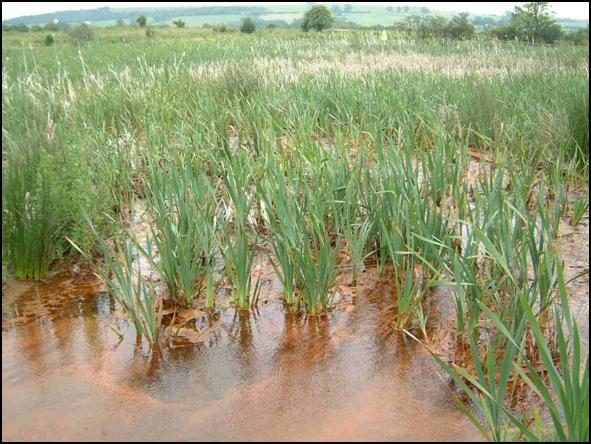
Properties of the datasheet
Datasheet id (original)
465
Creator
Feigl Viktória
Status
Verified
Adatlap típusaSoil remediation technology
Létrehozás
Módosítás